
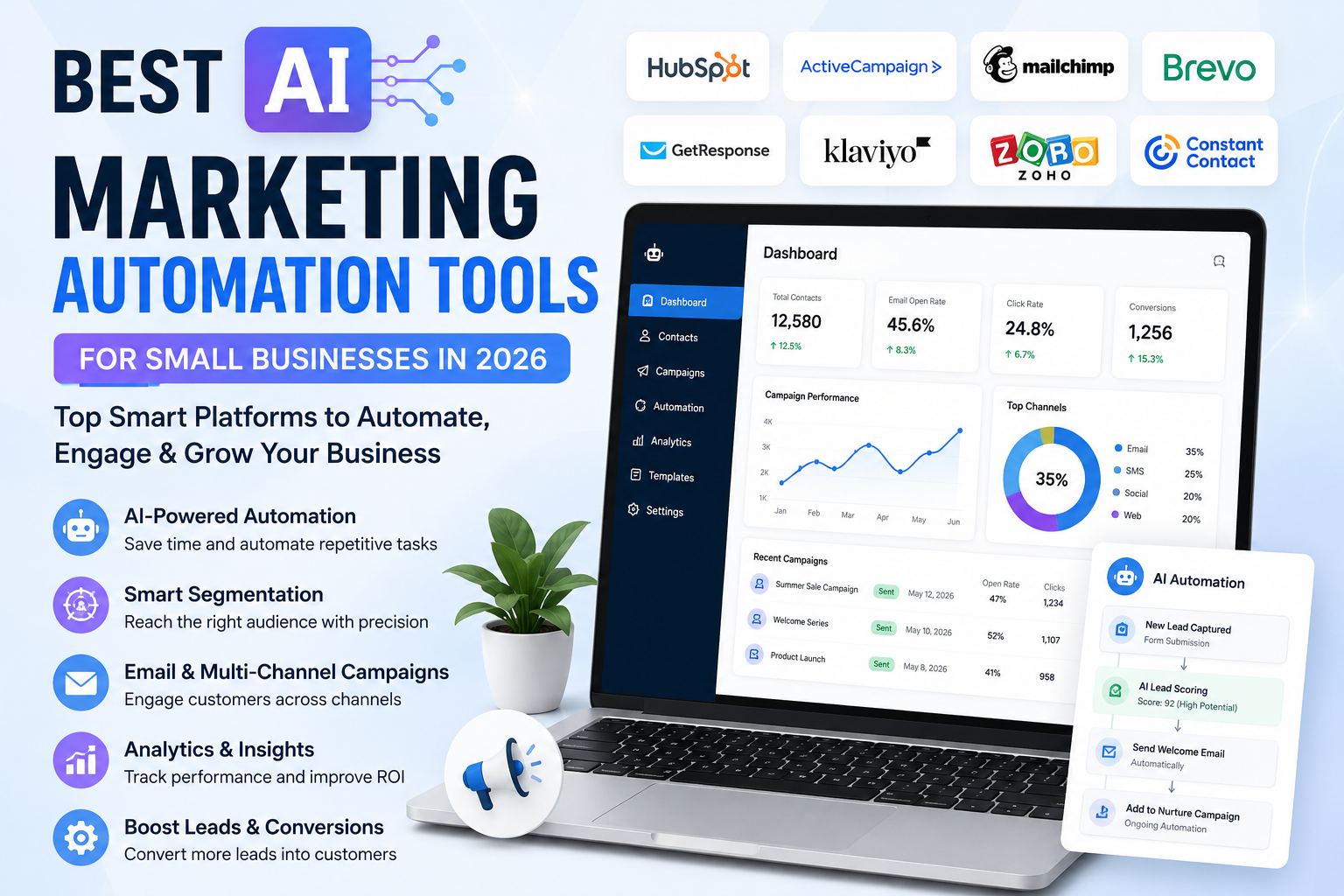
Best AI Marketing Automation Tools for Small Businesses in 2026
Editor’s Note: This article is fully updated in May 2026 to replace outdated marketing software information and include modern AI-powered automation tools.
Artificial Intelligence is rapidly transforming digital marketing in 2026. Small businesses no longer want to spend endless hours manually managing:
- emails
- lead generation
- customer follow-ups
- campaigns
- social media
- CRM workflows
Many marketers previously searched for tools like G-Doc Profits to improve marketing automation and lead generation workflows. However, in 2026, businesses now rely more on advanced AI-powered marketing automation platforms that offer smarter workflows, customer segmentation, campaign optimization, and automated lead nurturing.
Modern AI marketing automation software now helps businesses:
- automate repetitive tasks
- generate leads
- improve conversions
- personalize campaigns
- increase productivity
- reduce marketing costs
Whether you are:
- a freelancer
- agency owner
- startup founder
- affiliate marketer
- small business owner
- eCommerce seller
using the right AI-powered marketing platform can significantly improve workflow efficiency and customer engagement.
In recent years, AI tools have evolved beyond simple email automation. Modern platforms now include:
- AI content generation
- customer segmentation
- automated workflows
- predictive analytics
- smart lead scoring
- AI-powered campaign optimization
- chatbot integration
As competition increases online, businesses increasingly rely on automation to scale marketing efforts without hiring large teams.
In this detailed guide, we will compare the best AI marketing automation tools in 2026, including:
- HubSpot
- ActiveCampaign
- Mailchimp
- Brevo
- GetResponse
- Klaviyo
- Zoho Marketing Automation
- Constant Contact
We will discuss:
- features
- pros & cons
- pricing
- best use cases
- AI capabilities
- which platform is best for different business types
Why AI Marketing Automation Is Important in 2026
Traditional marketing workflows often create several problems:
- manual campaign management
- poor lead follow-up
- inconsistent customer communication
- low conversion rates
- time-consuming repetitive tasks
AI marketing automation tools solve many of these issues through:
- workflow automation
- personalized targeting
- predictive behavior analysis
- smart campaign scheduling
- automated customer journeys
Businesses increasingly use AI systems to:
- reduce manual workload
- improve customer experience
- optimize campaigns automatically
- scale marketing operations efficiently
1. HubSpot – Best Overall AI Marketing Automation Platform
Best For:
- small businesses
- agencies
- growing companies
- CRM-focused marketing
HubSpot remains one of the strongest all-in-one marketing automation platforms in 2026.
The platform combines:
- CRM
- email marketing
- automation
- lead management
- analytics
- customer tracking
into one ecosystem.
HubSpot’s AI-powered tools help businesses:
- automate workflows
- optimize campaigns
- manage leads
- personalize customer interactions
One major advantage is the platform’s scalability. Businesses can start small and expand features gradually as they grow.
Key Features
- AI email automation
- CRM integration
- lead scoring
- chatbot tools
- landing pages
- campaign analytics
- workflow automation
Pros
✅ Excellent all-in-one platform
✅ Strong CRM system
✅ Advanced automation workflows
✅ Great reporting tools
✅ Beginner-friendly interface
Cons
❌ Premium plans can become expensive
❌ Advanced automation locked behind higher tiers
You can explore more features directly from the official HubSpot website for CRM and marketing automation solutions.
2. ActiveCampaign – Best for Advanced Email Automation
Best For:
- email marketers
- affiliate marketers
- online businesses
- automation-heavy campaigns
ActiveCampaign is highly respected for its powerful email automation capabilities.
The platform focuses heavily on:
- customer journeys
- behavioral automation
- lead nurturing
- segmentation
- conversion optimization
Many marketers prefer ActiveCampaign because of its deep automation flexibility.
Key Features
- advanced email automation
- customer segmentation
- AI-powered personalization
- predictive sending
- CRM tools
- workflow builder
Pros
✅ Powerful automation engine
✅ Excellent email marketing tools
✅ Strong personalization
✅ Great segmentation features
Cons
❌ Learning curve for beginners
❌ Interface can feel complex initially
3. Mailchimp – Best Beginner-Friendly Marketing Tool
Best For:
- beginners
- startups
- freelancers
- small businesses
Mailchimp remains popular because of its simplicity and accessibility.
The platform now includes several AI-powered features such as:
- smart recommendations
- automated campaigns
- AI-generated subject lines
- predictive insights
Mailchimp works well for businesses starting their first automated campaigns.
Key Features
- email campaigns
- AI subject suggestions
- automation workflows
- audience management
- templates
- analytics
Pros
✅ Easy to use
✅ Strong free plan
✅ Good beginner platform
✅ Simple automation setup
Cons
❌ Advanced automation limited compared to competitors
❌ Pricing increases with larger audiences
4. Brevo – Best Budget AI Marketing Automation Tool
Best For:
- budget-conscious businesses
- startups
- growing companies
Brevo (formerly Sendinblue) offers strong automation features at affordable pricing.
The platform includes:
- email marketing
- SMS campaigns
- automation workflows
- CRM features
- WhatsApp campaigns
Many small businesses prefer Brevo because of its value-to-cost ratio.
Key Features
- email automation
- SMS marketing
- CRM integration
- AI send-time optimization
- workflow automation
Pros
✅ Affordable pricing
✅ Strong automation tools
✅ SMS support
✅ Good for small businesses
Cons
❌ Fewer advanced enterprise features
❌ Template customization less flexible
5. GetResponse – Best for Funnel & Webinar Automation
Best For:
- online educators
- affiliate marketers
- webinar marketers
- funnel-based businesses
GetResponse combines:
- email marketing
- webinars
- sales funnels
- automation
- landing pages
into one marketing ecosystem.
Its AI features help optimize:
- email timing
- customer engagement
- campaign performance
Key Features
- webinar hosting
- funnel builder
- email automation
- AI campaign optimization
- landing pages
Pros
✅ Strong funnel tools
✅ Webinar integration
✅ Good automation workflows
✅ Great for digital marketers
Cons
❌ Some advanced tools require higher plans
❌ Interface can feel busy
6. Klaviyo – Best for eCommerce Marketing
Best For:
- Shopify stores
- WooCommerce stores
- eCommerce brands
Klaviyo focuses heavily on:
- eCommerce automation
- customer retention
- purchase tracking
- abandoned cart workflows
The platform integrates deeply with online stores and customer behavior analytics.
Key Features
- abandoned cart automation
- AI personalization
- product recommendations
- customer segmentation
- SMS marketing
Pros
✅ Excellent for eCommerce
✅ Strong personalization
✅ Powerful automation
✅ Deep store integrations
Cons
❌ Pricing rises quickly with list size
❌ Mainly optimized for online stores
7. Zoho Marketing Automation – Best for Zoho Users
Best For:
- businesses using Zoho ecosystem
- CRM-focused teams
Zoho Marketing Automation integrates strongly with:
- Zoho CRM
- Zoho Mail
- Zoho Projects
- Zoho Analytics
The platform helps businesses automate:
- lead nurturing
- customer journeys
- email campaigns
- workflow tracking
Pros
✅ Strong CRM integration
✅ Affordable pricing
✅ Good automation workflows
Cons
❌ Best inside Zoho ecosystem
❌ More technical setup for beginners
8. Constant Contact – Best for Simplicity
Best For:
- local businesses
- nonprofits
- simple campaigns
Constant Contact focuses on easy-to-manage email automation and marketing tools.
It works especially well for businesses wanting:
- newsletters
- simple campaigns
- customer communication
- basic automation
Pros
✅ Easy to use
✅ Good support
✅ Beginner-friendly
Cons
❌ Less advanced automation
❌ Limited AI capabilities compared to competitors
Best AI Marketing Automation Tools Comparison Table
| Platform | Best For | AI Features | Ease of Use | Best Strength |
|---|---|---|---|---|
| HubSpot | All-in-one business marketing | Excellent | Easy | CRM + Automation |
| ActiveCampaign | Advanced email automation | Excellent | Medium | Workflow depth |
| Mailchimp | Beginners | Good | Very Easy | Simplicity |
| Brevo | Budget businesses | Good | Easy | Affordability |
| GetResponse | Funnels & webinars | Good | Medium | Funnel systems |
| Klaviyo | eCommerce | Excellent | Medium | Store automation |
| Zoho Marketing Automation | Zoho users | Good | Medium | CRM integration |
| Constant Contact | Small/local businesses | Basic | Easy | Simplicity |
Best AI Marketing Automation Tools: What Features Should You Look For?
When choosing AI marketing automation software, focus on:
Workflow Automation
Look for:
- email automation
- customer journeys
- campaign triggers
CRM Integration
Important for:
- lead tracking
- sales automation
- customer management
AI Optimization
Modern systems increasingly include:
- predictive analytics
- smart segmentation
- AI personalization
Multi-Channel Support
Strong platforms support:
- SMS
- social media
- chatbots
Analytics & Reporting
Good reporting helps improve:
- conversion rates
- campaign performance
- ROI tracking
Which AI Marketing Automation Tool Is Best?
Best Overall
HubSpot
Best for Advanced Automation
ActiveCampaign
Best for Beginners
Mailchimp
Best Budget Option
Brevo
Best for eCommerce
Klaviyo
Best Funnel Builder
GetResponse
Final Verdict – Best AI Marketing Automation Software in 2026
AI marketing automation has become essential for businesses wanting to scale efficiently in 2026.
The best platform depends heavily on:
- budget
- business size
- marketing complexity
- automation requirements
- sales workflows
For most businesses:
HubSpot
remains the strongest all-around platform because of its:
- automation
- CRM integration
- scalability
- AI-powered features
For budget-conscious users:
Brevo
offers excellent value.
For eCommerce businesses:
Klaviyo
remains one of the strongest specialized options.
The smartest strategy is selecting software that matches your:
- customer journey
- workflow complexity
- business model
- growth goals
rather than simply choosing the most popular platform.
Best AI Marketing Automation Tools: Frequently Asked Questions (FAQ)
What is AI marketing automation?
AI marketing automation uses artificial intelligence and workflow systems to automate marketing tasks such as email campaigns, lead management, and customer communication.
Which AI marketing platform is best for small businesses?
HubSpot, Mailchimp, and Brevo are excellent options for small businesses.
Is AI marketing automation expensive?
Some platforms offer affordable plans for startups and freelancers, while enterprise systems can become more expensive.
Can AI improve marketing conversions?
Yes. AI tools can improve personalization, customer targeting, and campaign optimization.
Which marketing automation tool is best for eCommerce?
Klaviyo is one of the strongest options for eCommerce automation and customer retention.
Last Updated: May 2026